
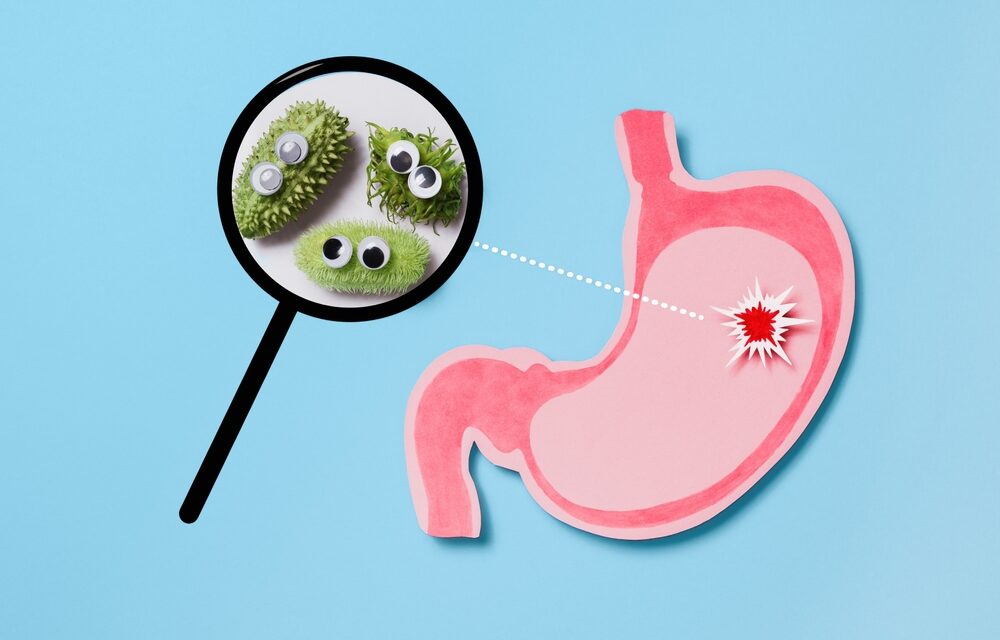
Helicobacter pylori (H. pylori) infection is a major cause of peptic ulcers and gastritis. Standard treatment usually involves multiple antibiotics, which can disrupt gut flora and cause side effects. Probiotics may offer extra support.
In a study of 80 patients with H. pylori infection, participants received either a placebo or a probiotic supplement containing eight bacterial strains for 10 days. A month later, 13 of 40 patients in the probiotic group tested negative for H. pylori, compared with none in the placebo group [1].
More recent analyses support this idea. Meta-analyses show that adding probiotics to standard triple or quadruple therapy improves eradication rates by 5–10% and significantly reduces nausea, diarrhea, and bloating [2, 3]. Strains most often associated with benefits include Lactobacillus reuteri, L. rhamnosus GG, and Saccharomyces boulardii.
While probiotics alone are unlikely to eliminate H. pylori in most cases, they can make therapy more tolerable and help restore a healthy gut environment afterward.
Educational only — not medical advice. Discuss any treatment decisions with doctors trained in natural healthcare.
References
-
Inflammation & Allergy – Drug Targets. 2012; 11(3): 244–249.
-
Helicobacter. 2019 Jun; 24(3): e12576. Probiotics for the management of Helicobacter pylori: an updated systematic review and meta-analysis.
-
Front Microbiol. 2022 Mar 25; 13: 828306. The role of probiotics in Helicobacter pylori eradication therapy: A meta-analysis of randomized controlled trials.